Beschreibung
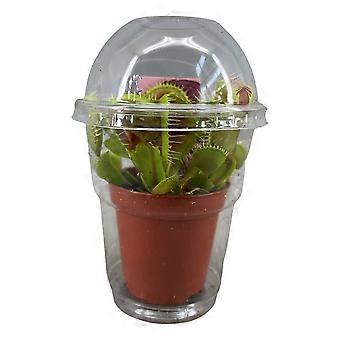
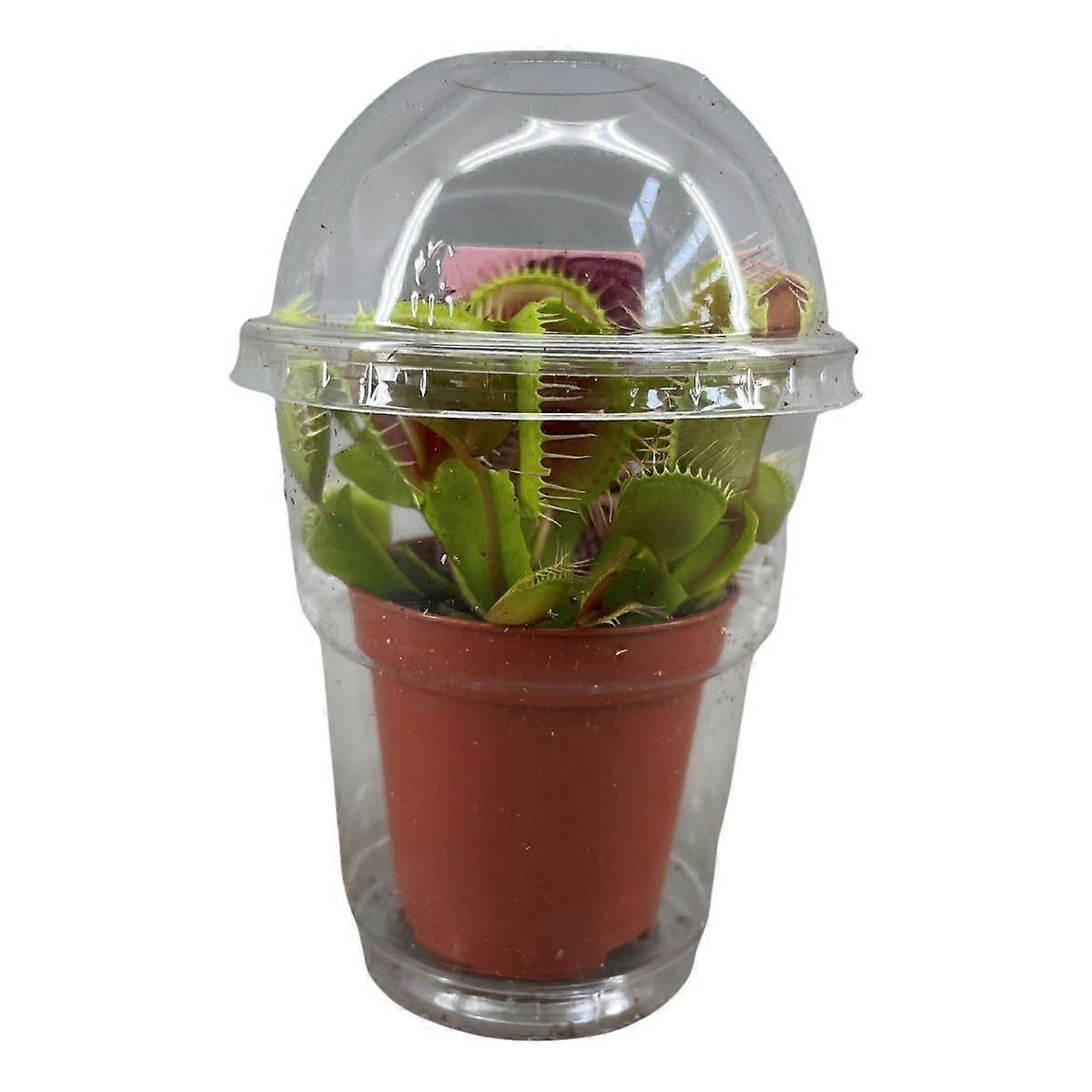
Dionaea muscipula Ø5.5cm
The Living Trap from the Carolina Wetlands Dionaea muscipula , commonly known as the Venus flytrap, is without doubt the most famous carnivorous plant in the world and one of evolution's most remarkable creations. Its traps - modified leaves shaped like green jaws with toothed margins - snap shut on prey in approximately 100 milliseconds, making this mechanism one of the fastest movements in the entire plant kingdom. Each trap is a small biochemical laboratory, capable of digesting insects and absorbing the nutrients needed for survival in the nutrient-poor soils where the plant grows naturally. The fascination that Dionaea exerts upon scientists and plant lovers is centuries old. Charles Darwin himself dedicated entire pages to this plant in his work 'Insectivorous Plants' (1875), calling it 'the most wonderful plant in the world.' And rightly so: Dionaea's capture mechanism is a brilliant example of evolutionary adaptation, in which a plant has developed the ability to actively hunt - a behaviour we normally associate only with animals. Owning a Dionaea muscipula means being a daily witness to one of nature's most spectacular phenomena. The plant rewards attentive observation: each trap has its own life cycle, its own drama of opening and closing, its own victory or failure in capturing prey. It is a plant that transforms a simple windowsill into a miniature theatre of survival. Origin and Botanical History Dionaea muscipula was scientifically described by John Ellis in 1768, in a letter addressed to Carl Linnaeus, who was so impressed that he gave the plant the generic name 'Dionaea,' referring to Dione, the mother of the goddess Aphrodite in Greek mythology. The specific epithet 'muscipula' means 'mousetrap' in Latin. The plant belongs to the family Droseraceae, in which it is the sole species of the genus Dionaea, though related to the sundews ( Drosera ). The natural range of Dionaea is surprisingly restricted: it grows exclusively within a radius of approximately 120 kilometres around the city of Wilmington, in North and South Carolina in the southeastern United States. Here, the plant occupies oligotrophic (nutrient-poor) bogs, wet savannas, and pond margins with sandy-peaty substrate, where the acidic, nitrogen-poor soil drove the evolution of the carnivorous mechanism as a nutrient supplementation strategy. Despite its small natural range, Dionaea muscipula is one of the most widely cultivated carnivorous plants in the world, with millions of specimens propagated annually in nurseries across Europe, North America, and Asia. The wild population, however, is vulnerable and protected by local and international legislation. The Traps - Modified Leaves Dionaea's traps are, botanically speaking, modified leaves. Each leaf consists of a widened petiole serving as a photosynthetic organ, and a leaf blade transformed into a bilobed trap. Mature traps reach 2 to 3 centimetres in length, with two symmetrical lobes connected by a central midrib functioning as a hinge. The lobe margins are equipped with rigid cilia (elongated projections) that interlock like the teeth of a steel trap when the trap closes. On the inner surface of each lobe are three extremely sensitive trigger hairs. When an insect touches two of these hairs within 20 seconds, the trap activates - the lobes close in approximately 100 milliseconds, and the marginal cilia form a cage from which the prey cannot escape. This double safety mechanism prevents accidental triggering by raindrops or inert particles. Once closed, the trap secretes digestive enzymes that break down the prey over 5 to 12 days, after which it reopens, exposing only the dried exoskeleton of the insect. Each trap can function 3 to 5 times before becoming exhausted and dying, being replaced by new leaves generated from the centre of the rosette. The Flowers Dionaea muscipula flowers in spring, typically in April-May, producing a slender flower scape rising 15-30 centimetres above the leaf rosette. This height has a clear evolutionary purpose: it distances the flowers from the traps, preventing accidental capture of pollinators. The flowers are small (approximately 1.5 cm), white, with five petals arranged in a star, and produce nectar that attracts bees and other pollinating insects. In cultivation, most growers recommend cutting the flower scape as soon as it appears, as flowering consumes significant energy and can weaken the plant. However, if seed production or simply admiring the flowers is desired, leaving the scape is not fatal, especially if the plant is vigorous. Growth Habit and Care Dionaea muscipula grows as a compact rosette with 5 to 10 active leaves simultaneously. Under optimal conditions, the rosette can reach 10-12 centimetres in diameter. The plant has an underground rhizome from which it continuously generates new leaves throughout the growing season (spring-autumn). In winter, Dionaea enters a mandatory dormancy period during which growth slows and outer l
-
Fruugo-ID:
515159400-1050958597
-
EAN:
4009425719371
Produktsicherheitsinformationen
Bitte beachten Sie die unten aufgeführten spezifischen Produktsicherheitsinformationen für dieses Produkt
Die folgenden Informationen werden vom unabhängigen Drittanbieter bereitgestellt, der dieses Produkt verkauft.
Sicherheitswarnungen:
Ornamental plant. Not intended for human or animal consumption. Keep out of reach of children and animals. Some species may cause skin or mucous membrane irritation upon contact or ingestion. Wash hands after handling.
Rückgabe & Stornierung
Rückgabe
Wir tun unser Bestes, um dafür zu sorgen, dass die von Ihnen bestellten Produkte vollständig und gemäß Ihrer Spezifikationen an Sie geliefert werden. Wenn Sie allerdings eine unvollständige Bestellung oder Artikel erhalten, die sich von den bestellten unterscheiden, oder es einen anderen Grund gibt, warum Sie mit Ihrer Bestellung nicht zufrieden sind, können Sie die gesamte Bestellung oder einzelne darin enthaltenen Produkte zurücksenden und eine vollständige Rückerstattung für die Artikel erhalten.
Vollständige Rückgaberichtlinie ansehen
Stornierung
Sie haben das Recht, innerhalb von 14 Tagen nach Erhalt Ihrer Bestellung ohne Angabe von Gründen von Ihrem Kauf zurückzutreten. Um Ihr Widerrufsrecht einfach auszuüben, können Sie den Link „Meine Bestellung stornieren“ in der Fußzeile jeder Seite oder in Ihrem Fruugo-Konto unter „Bestellungen“ nutzen. Sobald Sie von Ihrem Widerrufsrecht Gebrauch gemacht haben, senden wir Ihnen eine Bestätigungs-E-Mail. Falls Ihre Bestellung bereits vom Händler versandt wurde, erhalten Sie von uns die notwendigen Rücksendeanweisungen, um eine schnelle Bearbeitung Ihrer Rückerstattung zu gewährleisten.
Vollständige Stornierungsbedingungen ansehen